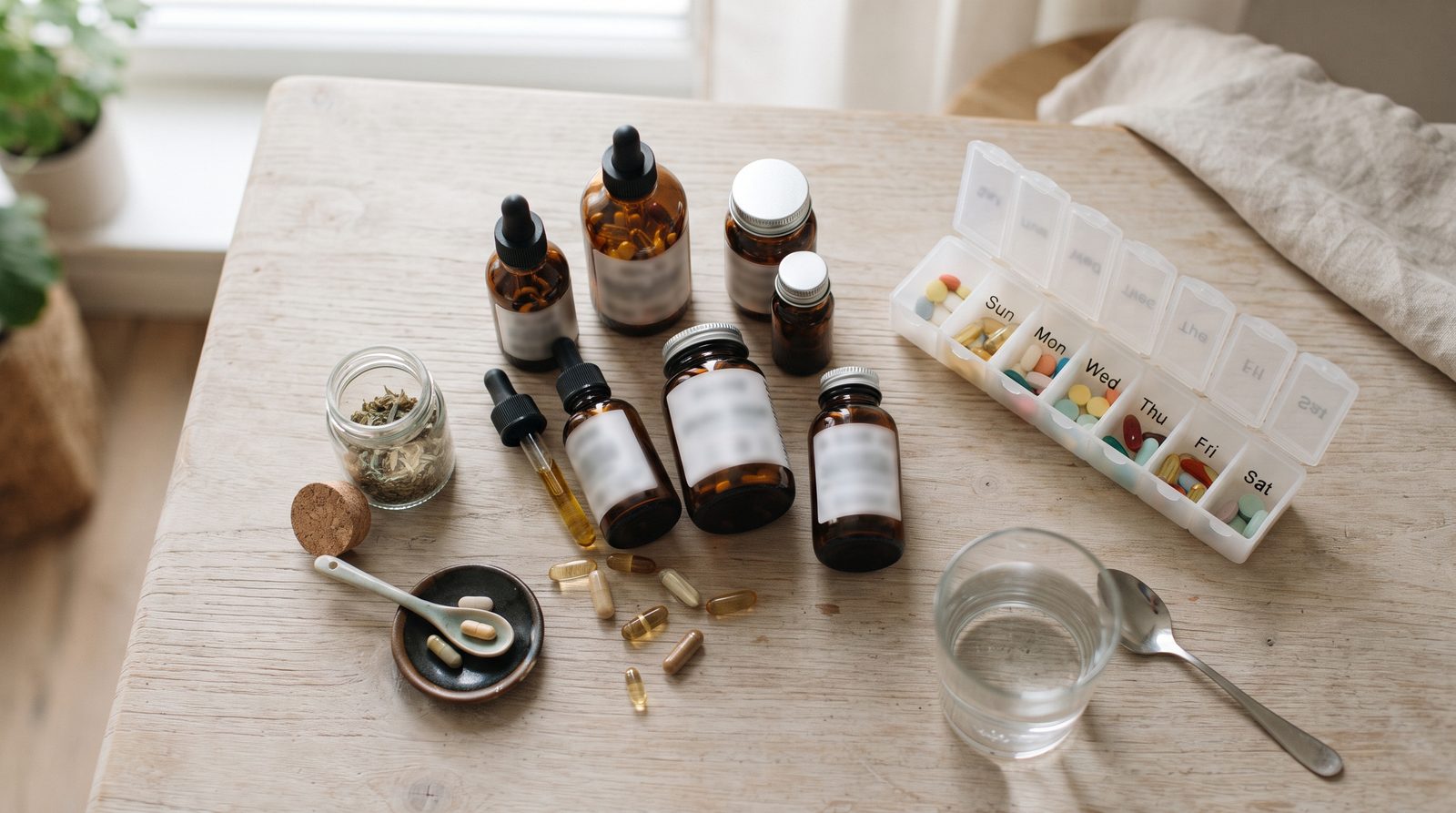
According to CDC's NCHS Data Brief No. 561 — published May 2026, based on National Health and Nutrition Examination Survey (NHANES) data collected between August 2021 and August 2023 — 60.2% of US adults aged 20 and older reported using a dietary supplement in the past 30 days. This is one of the more rigorous data points available on the subject: NHANES is a government-run, methodologically consistent survey, not a marketing-adjacent poll.
The breakdown by age tells the real story
Overall usage numbers hide a much more interesting pattern once you split by age:
- Ages 20–39: 46.3%
- Ages 40–59: 60.3%
- Ages 60 and older: 75.9%
Usage rises by roughly 15 percentage points at each decade-scale transition. This isn't a small trend — by the time someone reaches 60, they are nearly 1.7 times more likely to be taking a supplement than someone in their 20s or 30s.
Why does supplement use climb so consistently with age?
A few plausible, evidence-backed reasons converge here rather than one single cause:
- Absorption changes with age. Vitamin B12 absorption specifically declines as stomach acid production drops — up to a third of older adults produce too little acid to efficiently free B12 from food, even while absorbing supplemental B12 normally.
- Recommended intakes themselves increase with age for several nutrients — vitamin D rises from 600 IU to 800 IU after age 70, and calcium needs increase for postmenopausal women.
- More frequent contact with the healthcare system. Older adults see doctors more often, and a supplement recommendation is a routine part of many of those visits — managing bone density, cardiovascular risk, or a diagnosed deficiency.
The sex gap that shows up at every age
Women reported supplement use at 66.1%, compared to 53.9% for men — a 12-point gap that holds up across the entire NHANES sample, not just in one age bracket. Several factors likely contribute: women are more often advised to take folic acid and iron (menstruation, pregnancy planning), calcium recommendations for bone health are emphasized earlier for women, and general health-seeking behavior differs by sex in ways that show up across many healthcare metrics, not just supplements.
Usage rate isn't the same as need
It's worth being precise about what this data can and can't tell you. A 60.2% usage rate means a majority of US adults take something — it says nothing about whether that something addresses a real, identifiable gap versus being taken as general insurance. Separate research on multivitamin use specifically has found limited evidence of benefit for generally healthy adults without a specific deficiency, which suggests a meaningful share of that 60.2% may not be seeing a measurable effect from what they're taking, even though the behavior itself is common and understandable.
This isn't a reason to dismiss supplementation broadly — it's a reason to distinguish between "many people do this" and "this addresses my specific situation." The two questions have different answers.
What actually moves the needle: matching supplement to gap
The more useful lens than age-bracket averages is whether you have an identifiable reason to expect a specific shortfall — a dietary exclusion (vegan, dairy-free), a life stage with elevated needs (pregnancy, post-menopause), limited sun exposure, or symptoms that point toward a specific nutrient. Population data explains why usage climbs with age at a statistical level; it doesn't replace figuring out your own specific situation.
What this actually means for you
Population-level statistics like these are interesting, but they're not personal advice — the fact that 76% of people your age take a supplement doesn't tell you whether you specifically need one, or which one. What actually predicts whether a supplement will help isn't your age bracket, it's your individual diet, symptoms, and risk factors.
If you're wondering whether you fall into a group that's actually at risk for a specific deficiency — rather than just matching a demographic average — our free assessment walks through the same risk factors a clinician would ask about, in about two minutes.
Source: CDC/NCHS Data Brief No. 561, "Dietary Supplement Use: United States, August 2021–August 2023," published May 2026. Full brief available at cdc.gov/nchs.