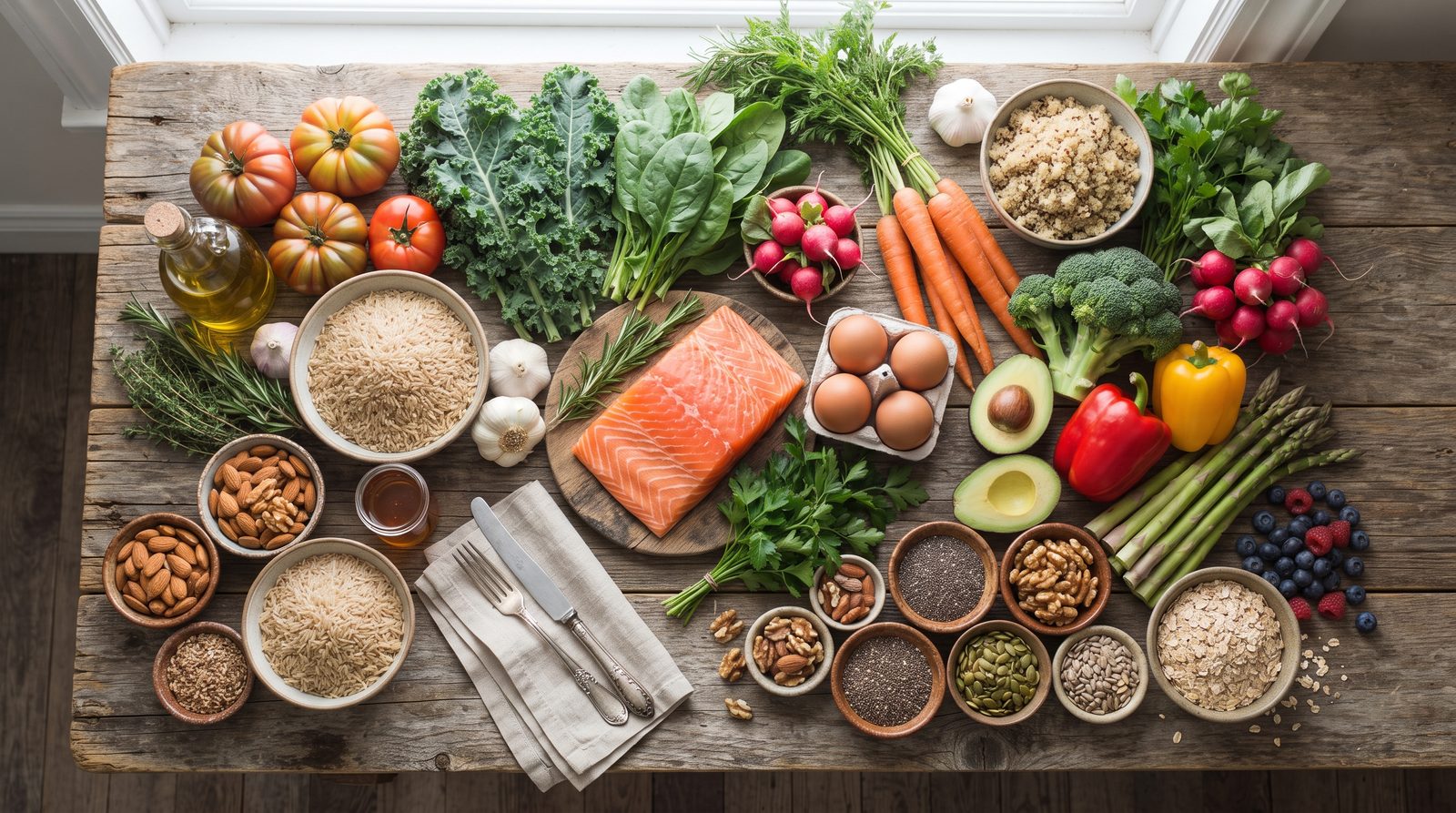
On January 7, 2026, the USDA and HHS jointly released the 2025–2030 Dietary Guidelines for Americans — the 10th edition of a document that's been published roughly every five years since 1980. What makes this edition notable isn't just the content, but the framing: it's the first edition in 25 years built primarily as direct, plain-language consumer advice rather than dense institutional guidance aimed mainly at clinicians and policymakers.
The headline message: "Eat Real Food"
Previous editions leaned heavily on nutrient-by-nutrient targets — specific grams of saturated fat, milligrams of sodium, percentages of daily calories from added sugar. The new edition leads instead with a simpler organizing principle: prioritize whole, minimally processed foods — protein, healthy fats, produce, whole grains — while reducing ultra-processed food, added sugar, and sodium.
This is a genuine strategic bet, not just a marketing refresh. The reasoning behind it: most people don't actually change behavior by tracking nutrient targets day to day, but a simpler food-first heuristic is something people can realistically apply at the grocery store or when ordering food.
What stayed the same
A few things are unchanged and worth being clear about:
- The guidelines are still general population advice, not individualized medical guidance — they're built for population-level health outcomes, not any one person's specific situation.
- They don't replace the process of identifying and addressing a confirmed, specific deficiency — that still starts with individual symptoms, risk factors, and often blood work, not general dietary advice.
- The core science on individual nutrients (how much vitamin D, iron, or calcium an adult needs) hasn't fundamentally changed — what changed is how the overall eating pattern is communicated.
Why "eat real food" is a real, if broad, health lever
A "real food first" pattern indirectly addresses several deficiency risks at once, since ultra-processed diets are consistently associated with lower intake of magnesium, fiber, potassium, and several vitamins — not because processed food is inherently poisonous, but because reformulated, shelf-stable products are frequently lower in these nutrients than the whole-food version they replace.
That said, "eat real food" is a population-level nudge, not a diagnostic tool. It won't tell you whether you personally are running low on a specific nutrient right now, or whether your particular symptoms point to iron, B12, vitamin D, or something else entirely.
How this compares to past editions
Earlier editions of the Dietary Guidelines were criticized by some nutrition researchers for being difficult for the average person to translate into actual shopping and eating decisions — dense nutrient tables don't easily become a grocery list. The 2025–2030 edition's bet is that reducing the core message to a food-first heuristic will close that translation gap, even if it means sacrificing some of the granular nutrient-level specificity that previous editions emphasized. Whether this improves actual dietary behavior at a population level will take years of follow-up data to assess — but the strategic shift itself is a meaningful, documented change worth understanding regardless of outcome.
What "ultra-processed" actually means in the new framing
One term doing a lot of work in the new guidelines is "ultra-processed food" — a category that goes beyond simply "packaged food" to specifically describe industrially formulated products with ingredients not typically found in a home kitchen (certain preservatives, emulsifiers, flavor compounds). The distinction matters because plenty of minimally processed packaged foods (frozen vegetables, canned beans, plain yogurt) aren't the target of this guidance — the emphasis is specifically on formulation, not packaging or convenience itself.
Where individualized guidance still matters
If you're already eating reasonably well by the new guidelines' standard but still experiencing symptoms like persistent fatigue, muscle cramps, or brain fog, that's a sign the gap is likely nutrient-specific rather than a general dietary-pattern issue. Our free assessment looks at your individual symptoms and risk factors — the layer of detail general population guidelines are explicitly not designed to cover.
Source: dietaryguidelines.gov — 2025–2030 Dietary Guidelines for Americans, USDA/HHS, released January 7, 2026.