Iron deficiency, and the anemia it causes when severe enough, holds a distinction other nutrient deficiencies don't: it's the most extensively tracked deficiency condition worldwide, and consistently the most common. The global data covering 205 countries over more than two decades (discussed in our earlier look at worldwide anemia trends) confirms this isn't a regional or wealthy-country-only issue — it's close to universal, with prevalence varying by degree rather than presence.
Why iron deficiency is so widespread
Iron plays a singularly demanding role: it's essential for making hemoglobin, the protein in red blood cells responsible for carrying oxygen throughout the body. Because iron is lost continuously through normal processes — and more significantly through blood loss — maintaining adequate levels requires consistent replenishment in a way many other nutrients don't.
Symptoms — and why they're often dismissed
- Extreme fatigue and weakness — frequently misattributed to stress, poor sleep, or simply a busy life
- Pale skin, nails, and gums
- Shortness of breath, especially with exertion that previously felt easy
- Cold hands and feet
- Brittle nails and hair loss
- Unusual cravings for non-food items like ice, called pica — an unusual but genuinely diagnostic symptom specific to iron deficiency
- Restless legs, particularly at night
Who is actually at meaningfully elevated risk
- Menstruating women, especially with heavy periods — the single largest risk factor globally, and the primary reason iron deficiency prevalence is consistently higher in women than men across virtually every country's data.
- Pregnant women — iron requirements roughly triple during pregnancy (from 18mg to 27mg daily) to support increased blood volume and fetal development.
- Vegetarians and vegans — plant-based (non-heme) iron is absorbed less efficiently than the heme iron found in meat, though pairing plant iron sources with vitamin C significantly improves absorption.
- Endurance athletes — particularly runners, who lose iron through a combination of mechanisms including foot-strike hemolysis (red blood cell destruction from repeated impact).
One important caution: don't supplement without testing
Unlike several other nutrients discussed on this site, iron is genuinely risky to supplement speculatively. The body has no efficient way to excrete excess iron, and roughly 1 in 300 people carry hereditary hemochromatosis, a genetic condition causing dangerous iron accumulation. Iron supplementation should follow a confirmed blood test — specifically a ferritin test, which measures stored iron more reliably than a standard hemoglobin count alone — not a symptom-based guess.
If several of the symptoms above sound familiar, our iron deficiency test is a useful first step toward figuring out whether that ferritin test is worth requesting.
Heme vs. non-heme iron, and why the distinction matters
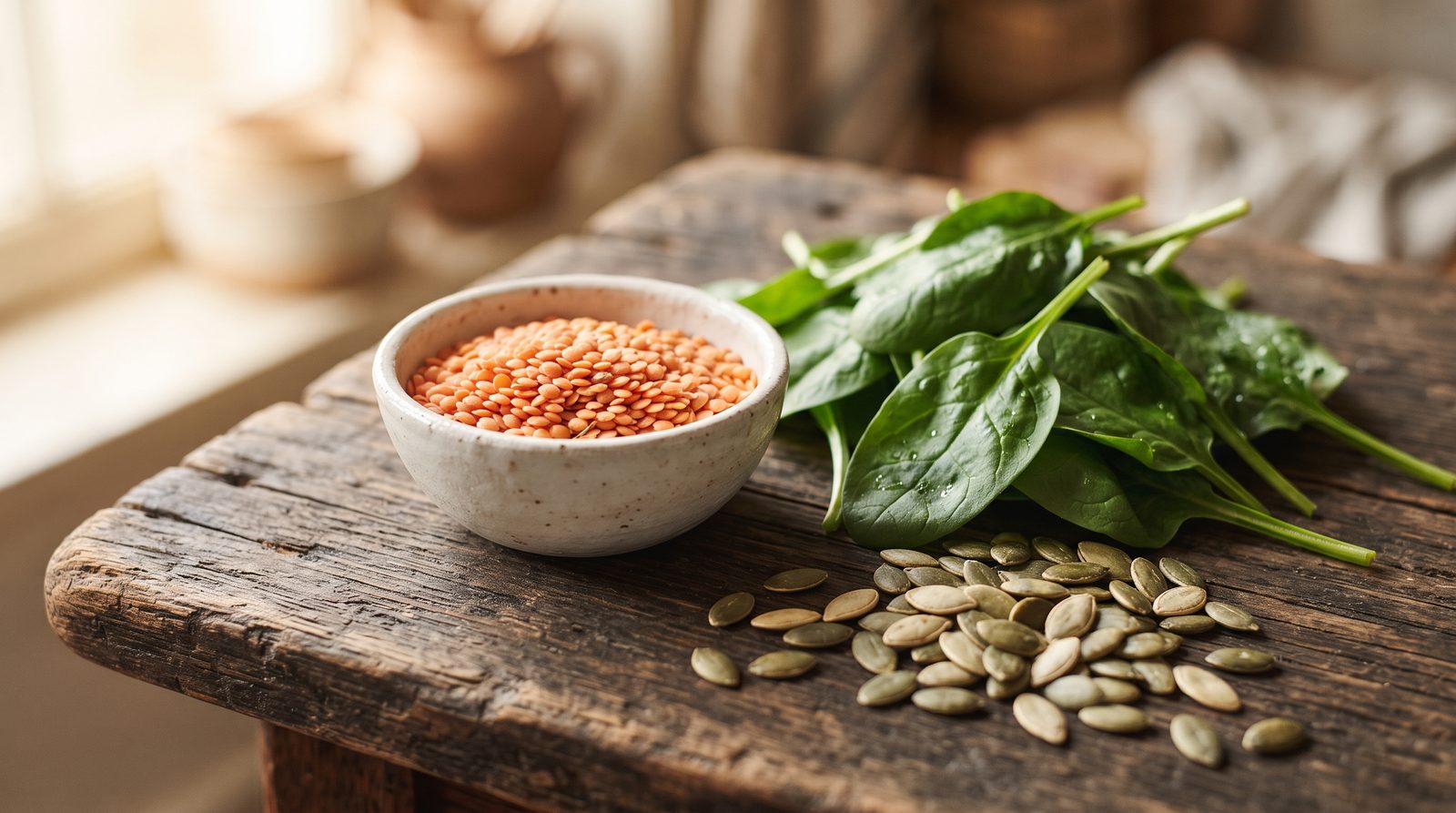
Not all dietary iron is created equal, and understanding the difference helps explain why vegetarians and vegans face genuinely elevated risk rather than a minor inconvenience. Heme iron, found in red meat, poultry, and fish, is absorbed efficiently by the body — typically 15-35% of what's consumed. Non-heme iron, found in plant sources like lentils, spinach, and fortified cereals, is absorbed far less efficiently, often only 2-20%, and that absorption rate is further reduced by compounds like phytates (also found in whole grains and legumes) and tannins (found in tea and coffee). Pairing non-heme iron sources with vitamin C at the same meal measurably improves absorption — a simple, evidence-backed strategy rather than requiring supplementation by default.
Why fatigue gets misattributed so often
Iron deficiency fatigue has a specific, if underappreciated, mechanism: hemoglobin carries oxygen to tissues throughout the body, so when hemoglobin production is impaired by insufficient iron, tissues — including muscles and the brain — receive less oxygen than needed for normal function. This produces a specific kind of fatigue, often described as feeling disproportionate to activity level or unrelieved by rest, that's frequently mistaken for simply being out of shape, overworked, or under-slept, especially in otherwise busy, seemingly healthy adults.
Sourced from NIH Office of Dietary Supplements clinical guidance on iron, and WHO/Our World in Data global anemia prevalence data.